


 Pristupačnost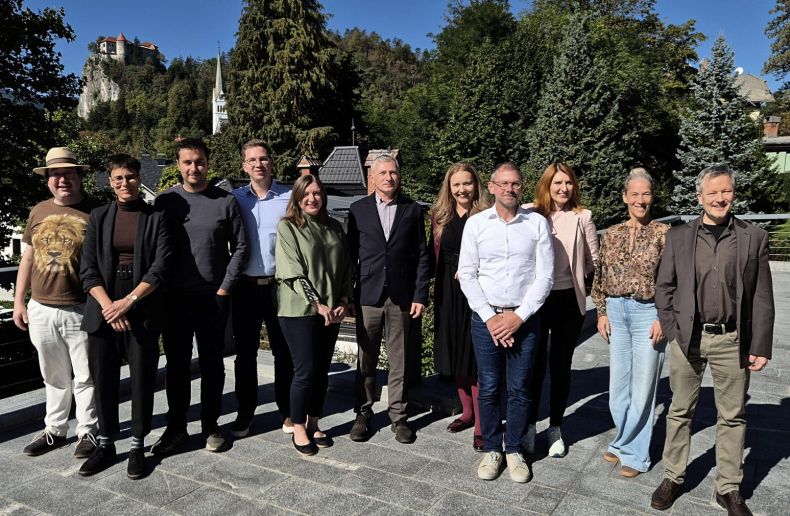
Faculty members of the Department of Sociology at the Faculty of Croatian Studies, University of Zagreb, participated in the international research workshop AI and the Future: Challenges, Perspectives, Research Opportunities, held on 24 and 25 September at the IEDC – Bled School of Management in Slovenia. In two presentations, they presented analyses conducted within the project Dimensions of Digital Inclusion and Exclusion in Croatian Society (DIGI-HR).
Asst. Prof. Erik Brezovec, PhD, delivered the presentation AI Use and Digital Vulnerability: Perceived Independence, Participation and Social Well-Being, co-authored with Katarina Jelić from the Department of Psychology. The authors examined the relationship between the use of artificial intelligence and issues of digital vulnerability, opportunities for social participation, and social well-being. Their analysis was based on data from a survey conducted on a sample of 1,083 adults in Croatia. According to the findings presented, 44.3% of respondents reported using generative artificial intelligence for text generation in their everyday lives, with usage being considerably more frequent among younger age groups.
The presentation also raised the question of what it means to be independent of digital tools. Brezovec emphasised that a subjective sense of independence does not, in itself, indicate whether an individual has equal opportunities to access information and services or to participate in society. Digital vulnerability should therefore be considered in the context of material conditions, available skills, and actual opportunities for participation.
Asst. Prof. Marija Zelić, PhD, delivered the presentation Who Uses AI? Age Differences in Access, Confidence, Affordability, and Use, co-authored with Asst. Prof. Ana Marija Dunaj, PhD. Drawing on data from the DIGI-HR project, they analysed how age and education are associated with the use of artificial intelligence tools, as well as differences between age groups in access to devices, their affordability, and individuals’ assessments of their own digital skills.
The findings indicate that the use of artificial intelligence for text generation is most common among younger age groups. At the same time, lower rates of use among older adults do not imply that older individuals who already use such tools lack confidence in their abilities. Zelić emphasised that understanding digital inclusion requires a distinction between access to technology, digital skills, and actual technology use. Differences in social well-being between users and non-users of artificial intelligence cannot, moreover, be attributed to the use of these tools alone.
The workshop brought together researchers from several countries to discuss social and professional changes associated with artificial intelligence and to develop new research questions and opportunities for future collaboration.