


 Pristupačnost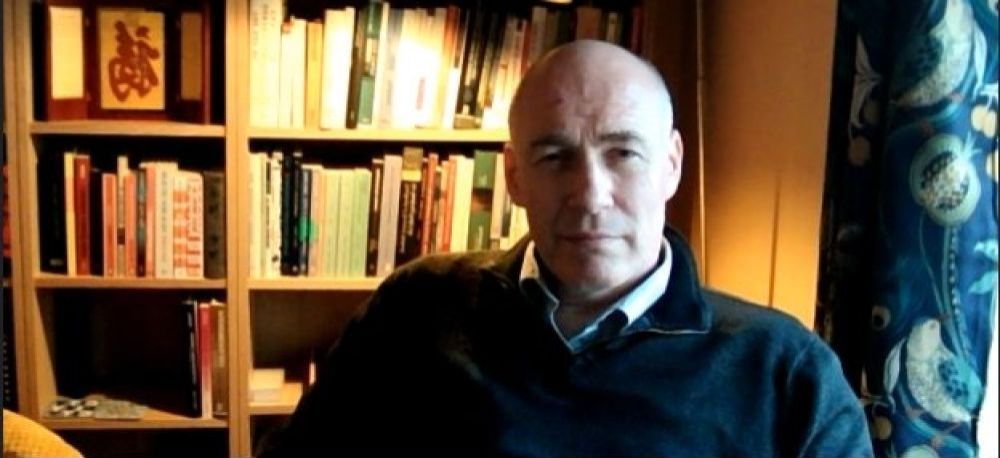
The distinguished British sociologist and Professor of Medical Sociology will give a lecture on Thursday, 7 May, addressing how the past is shaped through collective memory, cultural interpretation, and social power in contemporary society.
A guest lecture by Professor Barry J. Gibson of the University of Sheffield will be held at the Faculty of Croatian Studies, University of Zagreb, on Thursday, 7 May.
The lecture, entitled “Time-Tripping from the Academy to the Icon: Negotiating Methodological Schisms and the Contested Legacy of Kurt Cobain”, will begin at 9:35 a.m. in the Šibenik lecture hall.
In his lecture, Professor Gibson will introduce the concept of “time-tripping” as a social process through which past events are reconstructed from the perspective of contemporary social issues and interpretations. Starting from the history of, and methodological disputes within, grounded theory, he will examine how collective memory is shaped through competing interpretations of the past, in which questions of authorship, power, and social legitimation play a crucial role.
The second part of the lecture will focus on an analysis of the reputational legacy of Kurt Cobain, the frontman of Nirvana, through conflicting narratives about his life and legacy. Drawing on memoir and biographical sources, Professor Gibson will demonstrate how social memory is formed through competing interpretations that reflect broader social dynamics, including gender politics and cultural conflicts surrounding historical memory.
The lecture will conclude by linking these themes to the issue of history and collective memory in conflicted societies, particularly from the perspective of research into historical narratives and social divisions in post-conflict communities.
Professor Gibson is based at the School of Clinical Dentistry, University of Sheffield, where he serves as Professor of Medical Sociology and Head of the Person-centred and Population Oral Health Research Group. He has been affiliated with the University of Sheffield since 2004, where he established and led the Master’s programme in Dental Public Health. His research encompasses medical sociology, public health, and social theory, with a particularly significant contribution to the development of medical sociology and to methodological debates on grounded theory.
Professor Gibson’s visit is organised as part of the institutional research project DIGI-HR, conducted at the Faculty of Croatian Studies. The project examines how conditions of digital inclusion and exclusion are shaped in contemporary Croatian society, with particular emphasis on the digital divide, social inequalities, and opportunities for reducing them through lifelong learning.
Students, faculty members, and all interested participants are invited to attend this interdisciplinary lecture, which raises important questions about the relationship between history, collective memory, culture, and social power.