

 Pristupačnost
The Department of Sociology was established in 1992 and is one of the core disciplines of the Faculty of Croatian Studies. The concept of sociology studies focuses on the application of sociological theories and social science methodology for understanding social processes and phenomena in the specific context of Croatian society and comparatively in a European and global perspective. The study of sociology aims to train highly qualified sociological research personnel with professional research and analytical skills necessary for productive work in the public and private sectors. The sociology program at the bachelor's and master's levels is organized according to current international scientific standards.
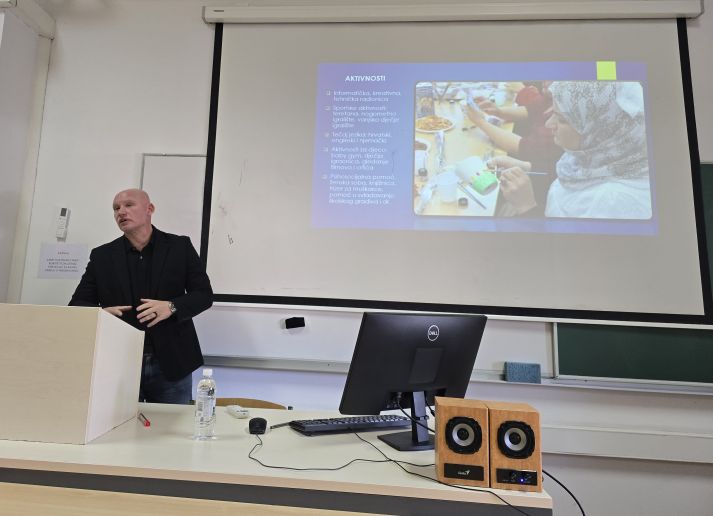
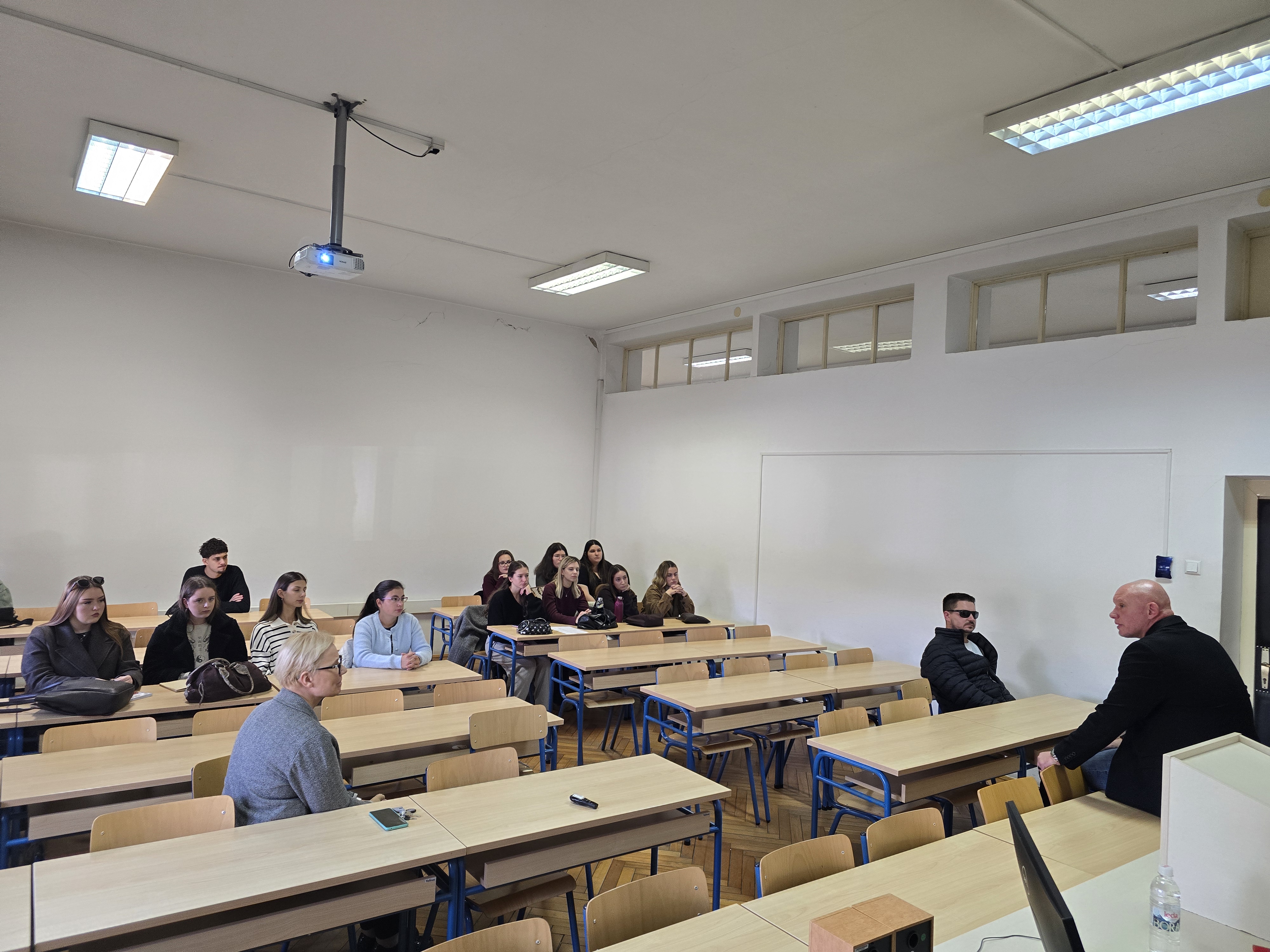
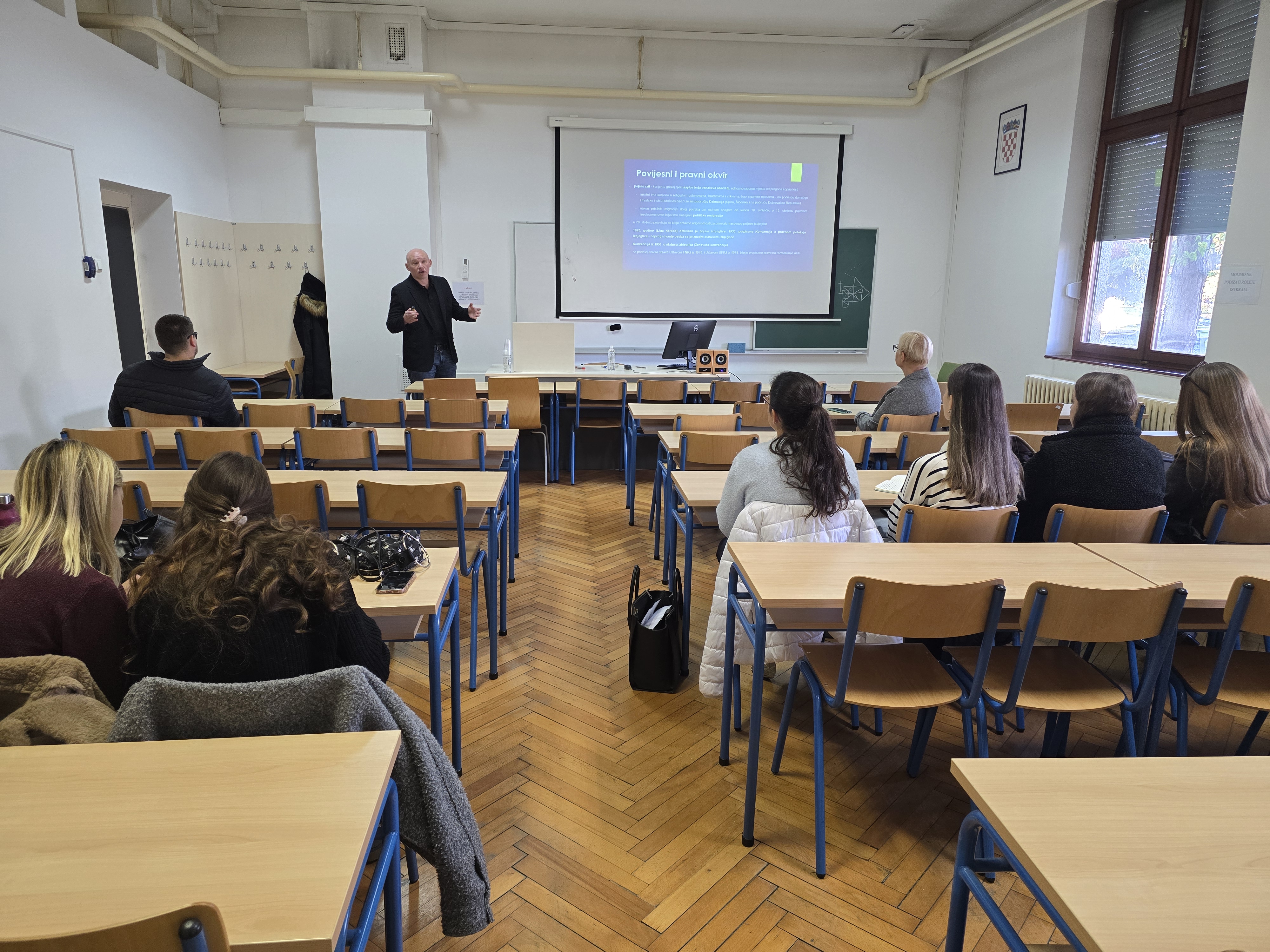
On Wednesday, 28 October, Filip Stipić from the Ministry of the Interior delivered a lecture on the international protection system in the Republic of Croatia in the Gospić lecture hall at the Faculty of Croatian Studies. The lecture has become an annual tradition within the Sociology of Security course in the undergraduate Sociology programme. This year marked his third consecutive guest lecture, continuing a collaboration established two academic years ago.
Stipić, who holds a postgraduate specialist qualification in national security and has more than 20 years of extensive professional experience in international protection, as well as experience gained through participation in five missions abroad, connected the system’s historical and legal development with its day-to-day operation. He outlined the development of international protection in Croatia, from the first legislation governing this area to the contemporary European framework and the Pact on Migration and Asylum, which began to apply on 12 June this year.
He devoted particular attention to clarifying key concepts. He explained the relationship between international protection, asylum and subsidiary protection, highlighting the differences between the two forms of protection. He guided students through the procedure for obtaining international protection, from expressing an intention to apply and submitting an application to its examination and the final decision, explaining the roles of all relevant institutions along the way.
Alongside this overview of the procedure, he presented current figures on international protection and explained what they reveal about the state of the Croatian system and the challenges it faces. The practical part of the lecture covered the operation of the temporary reception centre in Dugi Dol and the reception facilities at Porin in Zagreb and in Kutina. These examples helped students understand how reception and accommodation are organised, as well as the day-to-day work with people seeking international protection.
A substantial part of the lecture focused on the Pact on Migration and Asylum and the changes resulting from its implementation. Stipić explained how the new European framework operates and how its rules affect procedures and the organisation of the international protection system.
By bringing together the legal framework, current data and practical experience, the lecture gave students a more comprehensive understanding of international protection as an important sociological, humanitarian and security issue.