


 Pristupačnost
The Department of Sociology was established in 1992 and is one of the core disciplines of the Faculty of Croatian Studies. The concept of sociology studies focuses on the application of sociological theories and social science methodology for understanding social processes and phenomena in the specific context of Croatian society and comparatively in a European and global perspective. The study of sociology aims to train highly qualified sociological research personnel with professional research and analytical skills necessary for productive work in the public and private sectors. The sociology program at the bachelor's and master's levels is organized according to current international scientific standards.
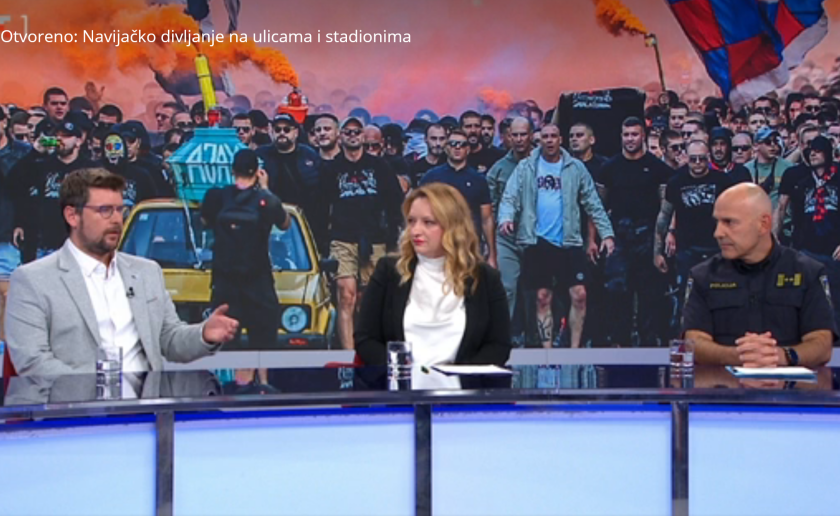
Photo: Screenshot / Otvoreno, HRT
Assistant Professor Ivan Perkov, PhD, from the Department of Sociology at the University of Zagreb Faculty of Croatian Studies, has recently commented in a series of television, radio and newspaper appearances on current incidents involving fan groups, including violent clashes between supporters and the glorification of Nazism during a fan march in Split. He discussed the sociological causes of fan violence, group identity, radicalisation and the responsibility of social institutions for HRT’s Otvoreno, RTL Direkt, Croatian Radio, tportal, Jutarnji list and 24sata.
In his analyses, Perkov emphasised that fan groups represent specific social communities in which belonging, solidarity and collective identity play an extremely important role. He also pointed out that within the ultras movement, fan identity can become increasingly detached from the sporting results of the clubs themselves, with some members placing greater importance on demonstrating power and dominance over rival groups than on football itself.
He paid particular attention to group dynamics, the social position of individuals who find a sense of belonging and recognition through fan groups, and the mechanisms through which violence becomes normalised. Commenting on the glorification of Nazism and antisemitic chants in Split, he stressed that such behaviour is unacceptable in a civilised society and requires unequivocal social condemnation, regardless of whether it stems from genuine ideological beliefs, lack of education or a desire to provoke.
Appearing on HRT’s Otvoreno on 19 October, Perkov further addressed the relationship between fan groups, the police and the judiciary. He pointed to shortcomings in the institutional response to violence and emphasised the importance of consistent law enforcement, effective cooperation among institutions and long-term educational efforts. He also stressed that responsibility for systemic shortcomings should primarily be sought among those with the greatest decision-making power.
These media appearances contribute to a broader public discussion on the social causes of violence, the relationship between sport and collective identity, extremism, and the responsibility of institutions for safeguarding democratic values.