

 Pristupačnost
The Department of Sociology was established in 1992 and is one of the core disciplines of the Faculty of Croatian Studies. The concept of sociology studies focuses on the application of sociological theories and social science methodology for understanding social processes and phenomena in the specific context of Croatian society and comparatively in a European and global perspective. The study of sociology aims to train highly qualified sociological research personnel with professional research and analytical skills necessary for productive work in the public and private sectors. The sociology program at the bachelor's and master's levels is organized according to current international scientific standards.
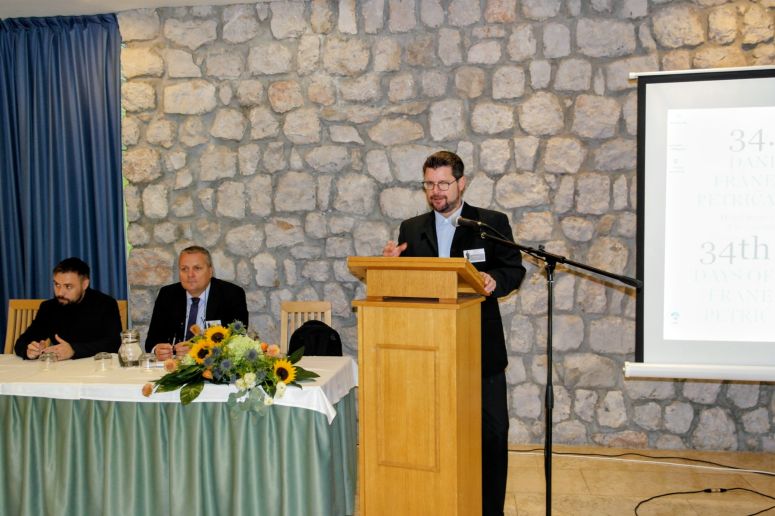
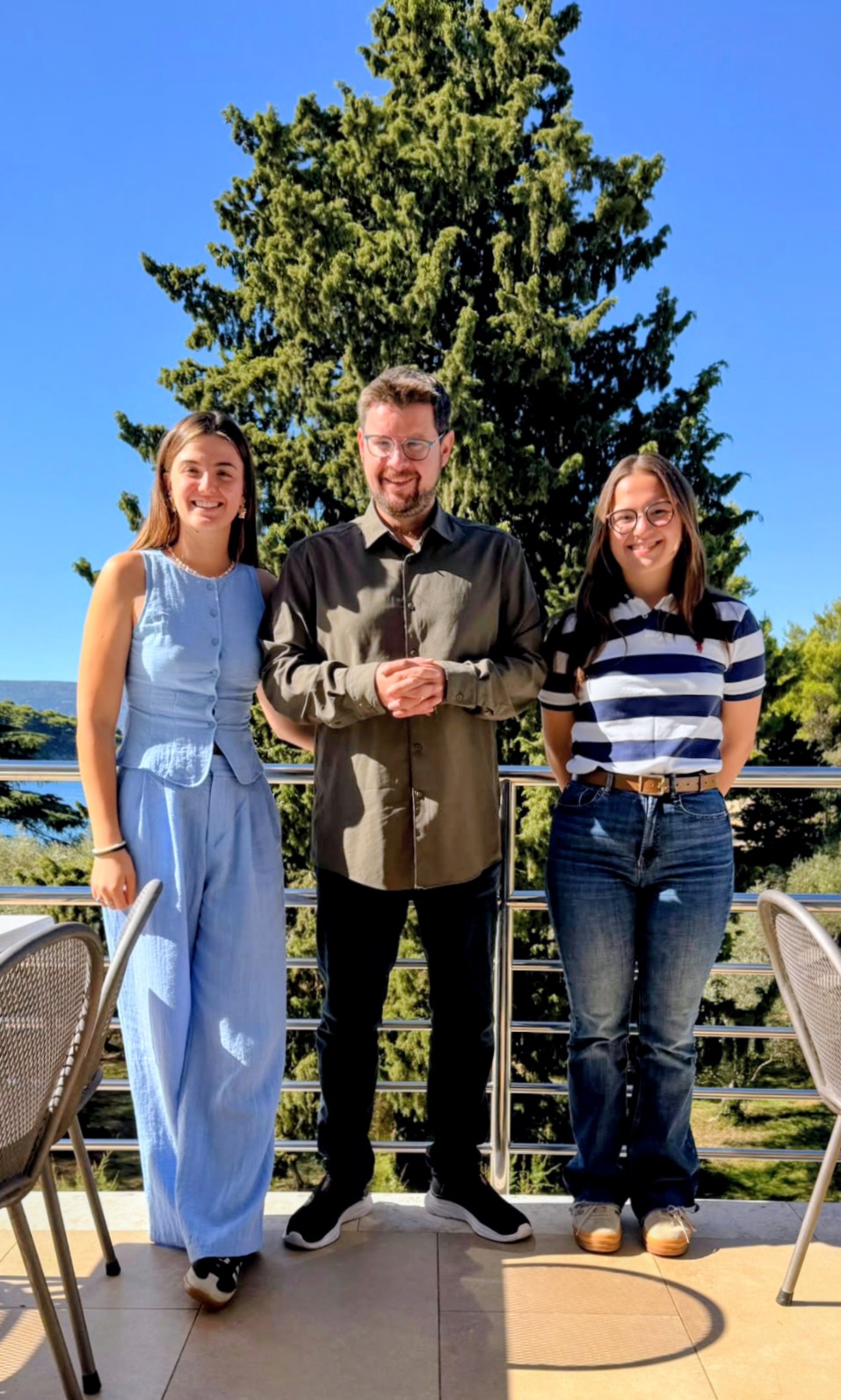
Assistant Professor Ivan Perkov and sociology students Ana Aračić, Petra Budimir-Bekan and Lucijan Mofardin from the Faculty of Croatian Studies at the University of Zagreb participated in the 34th Days of Frane Petrić in Cres. The Faculty of Croatian Studies is one of the co-organizers of this international scholarly and cultural event, which included the international symposium “Croatian Philosophy and Culture in Interaction and Context”.
Memory Culture, Education and Democratic Values
 Assistant Professor Ivan Perkov delivered a presentation entitled “Memory Culture as a Sociological Problem: The Holocaust between Education, Public Memory and Democratic Values”. In addition to presenting, Perkov is also a member of the symposium’s organizing committee.
His presentation focused on how societies shape, transmit and institutionalize memories of traumatic events from the past. The Holocaust was considered not only as a historical event but also as a subject of sociological analysis connected to collective memory, education, public memory, responsibility and democratic values.
The presentation builds on the development of the “Holocaust” course, taught at the Faculty of Croatian Studies by Professor Renato Matić and Assistant Professor Ivan Perkov. The course’s development is also informed by international professional training: Matić and Perkov attended a training program in Berlin, while Perkov also participated in an international Yad Vashem seminar in Thessaloniki in August this year, dedicated to contemporary approaches to Holocaust education.
Further development of the course and international cooperation is supported by funding from Northwestern University in the United States, intended for developing teaching materials, strengthening international connections, and involving students in additional educational activities.
 Student Presentations on Culture, Young People and Science
The sociology students delivered their presentations within the symposium “Croatian Philosophy and Culture in Interaction and Context”, addressing cultural heritage, digital change and the relationship between science and values.
Ana Aračić presented “From Slavonia to Croatian and European Cultural Heritage: Josip Juraj Strossmayer, Matija Mesić and Josip Stadler”. She explored their contributions to shaping Croatia’s cultural and intellectual landscape and their place in the European context. Particular attention was paid to the relationship between local, national and European identities and the role of cultural and educational institutions in transmitting heritage.
Petra Budimir-Bekan delivered a presentation entitled “Social Media as Drivers of Cultural Change among Young People in Croatia”. She examined the influence of social media on young people’s communication, values, identities and everyday practices, focusing on the spread of new cultural patterns, the emergence of forms of belonging and the ways opinions are shaped and expressed in digital environments.
Lucijan Mofardin discussed the value neutrality of science through the philosophy of Neven Sesardić. His presentation raised the question of whether science can be entirely separated from value judgements and examined the relationship between scientific objectivity and the social context in which scientific knowledge is produced. Particular emphasis was placed on the relationship between facts, values and scientists’ responsibility.
The students’ participation was financially supported by the Faculty of Croatian Studies. Presenting at an international scholarly conference enabled them to share their research interests, participate in academic discussions and connect their studies with research.
During their stay in Cres, the students also met representatives of various institutions and organisations, including potential future employers, and learned about opportunities for professional development after graduation. The participation of teaching staff and students in the Days of Frane Petrić helped connect sociological research, teaching, international academic cooperation and practical experience.