

 Pristupačnost
The Department of Sociology was established in 1992 and is one of the core disciplines of the Faculty of Croatian Studies. The concept of sociology studies focuses on the application of sociological theories and social science methodology for understanding social processes and phenomena in the specific context of Croatian society and comparatively in a European and global perspective. The study of sociology aims to train highly qualified sociological research personnel with professional research and analytical skills necessary for productive work in the public and private sectors. The sociology program at the bachelor's and master's levels is organized according to current international scientific standards.
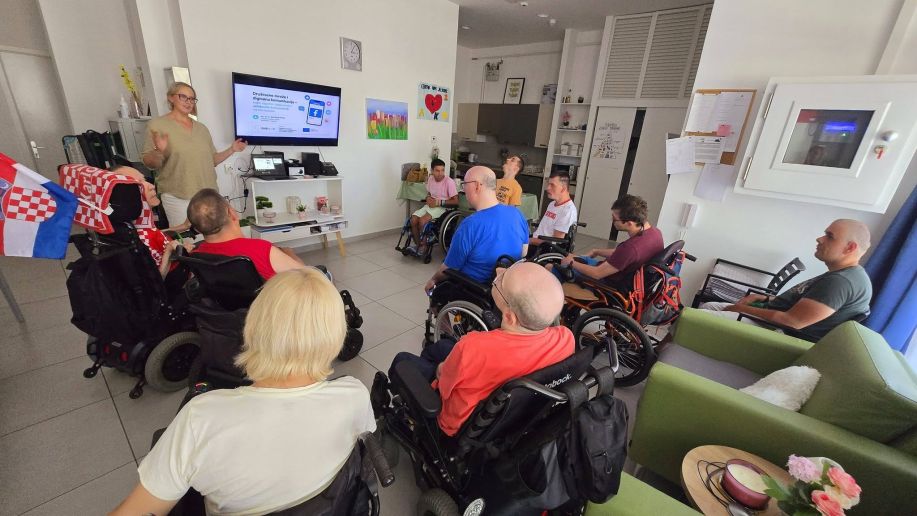
Photo: Zagreb Centre for Independent Living
On Wednesday, 24 June, the Zagreb Centre for Independent Living hosted the second educational workshop as part of the institutional project "Dimensions of Digital Inclusion and Exclusion in Croatian Society (DIGI-HR)", implemented by the Faculty of Croatian Studies, University of Zagreb. One component of the project focuses on developing the digital competencies of the Centre's users, with the aim of enabling their safer and more active participation in the digital society.
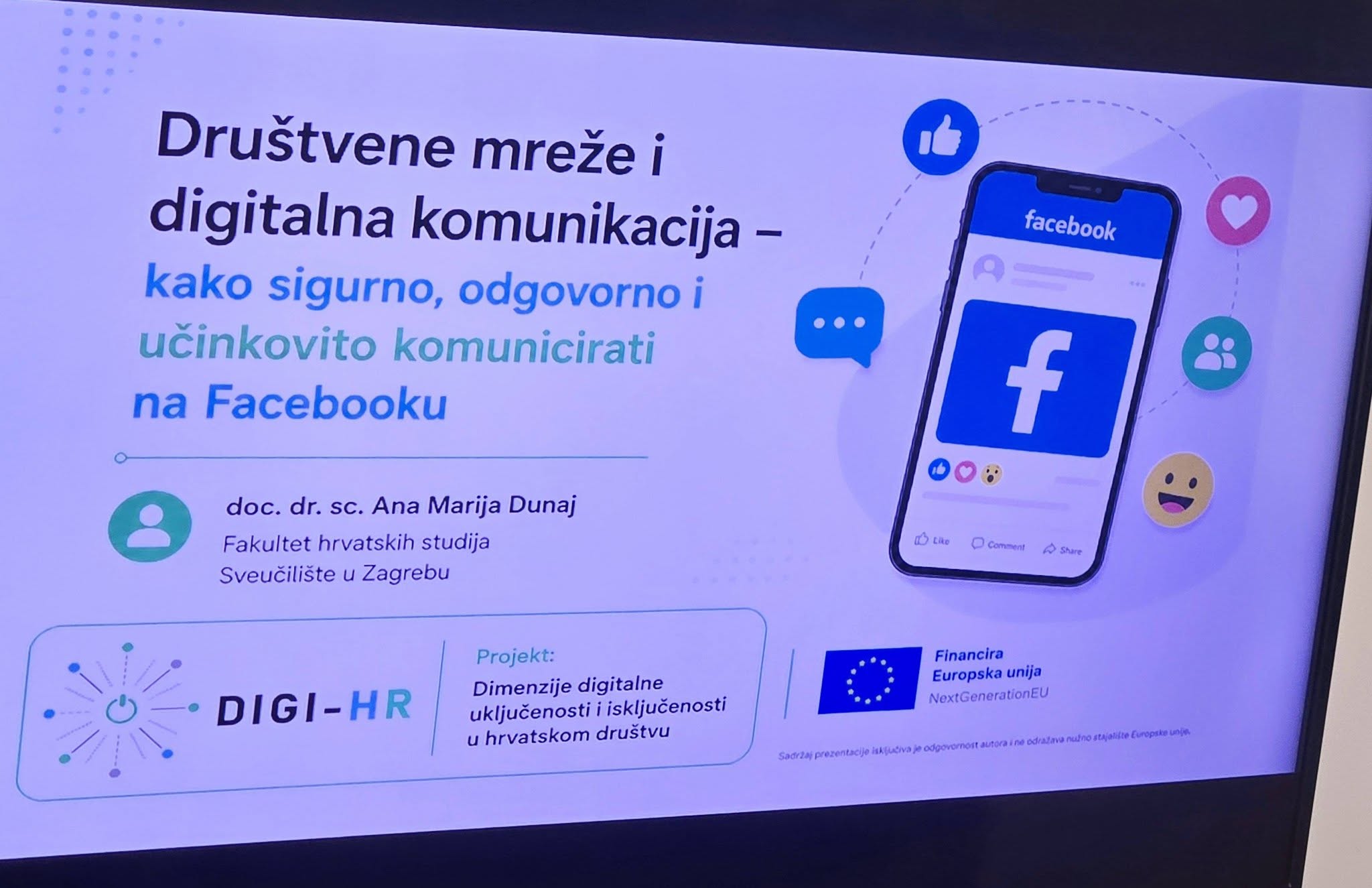
The workshop, entitled "Social Media and Digital Communication – How to Communicate Safely, Responsibly and Effectively on Facebook," was delivered by Ana Marija Dunaj, PhD, from the Department of Sociology at the Faculty of Croatian Studies.
 The workshop attracted considerable interest from participants, who actively engaged in the discussion, asked numerous questions about the use of social media and the challenges of digital communication, and shared their own experiences and examples from everyday online interactions.
The lecture began with an overview of the development of social media, tracing its evolution from its early beginnings to its current role in everyday life. Participants learned why Facebook, despite the emergence of many new platforms, remains the world's largest social networking site and continues to play an important role in connecting different generations and local communities.
Particular emphasis was placed on the responsible and safe use of social media, recognising reliable and trustworthy information, and the basic principles of writing effective social media posts. Through practical examples, participants discussed common situations they encounter in the digital environment and received practical guidance for communicating more safely, responsibly and effectively online.
The DIGI-HR project continues to implement educational activities aimed at promoting digital literacy, strengthening digital competencies, and encouraging the active inclusion of citizens who are at risk of digital exclusion in today's digital society. The next workshop is scheduled for July.