

 Pristupačnost
The Department of Sociology was established in 1992 and is one of the core disciplines of the Faculty of Croatian Studies. The concept of sociology studies focuses on the application of sociological theories and social science methodology for understanding social processes and phenomena in the specific context of Croatian society and comparatively in a European and global perspective. The study of sociology aims to train highly qualified sociological research personnel with professional research and analytical skills necessary for productive work in the public and private sectors. The sociology program at the bachelor's and master's levels is organized according to current international scientific standards.
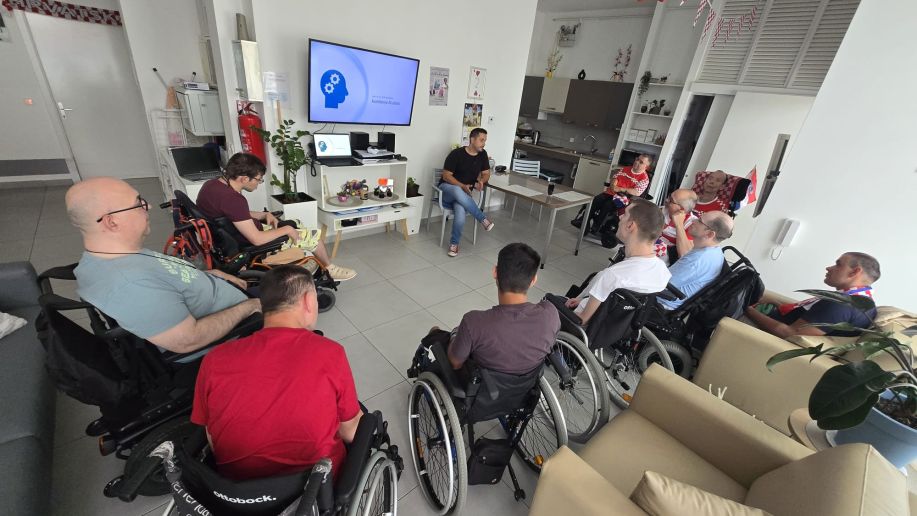
Photo: Zagreb Centre for Independent Living
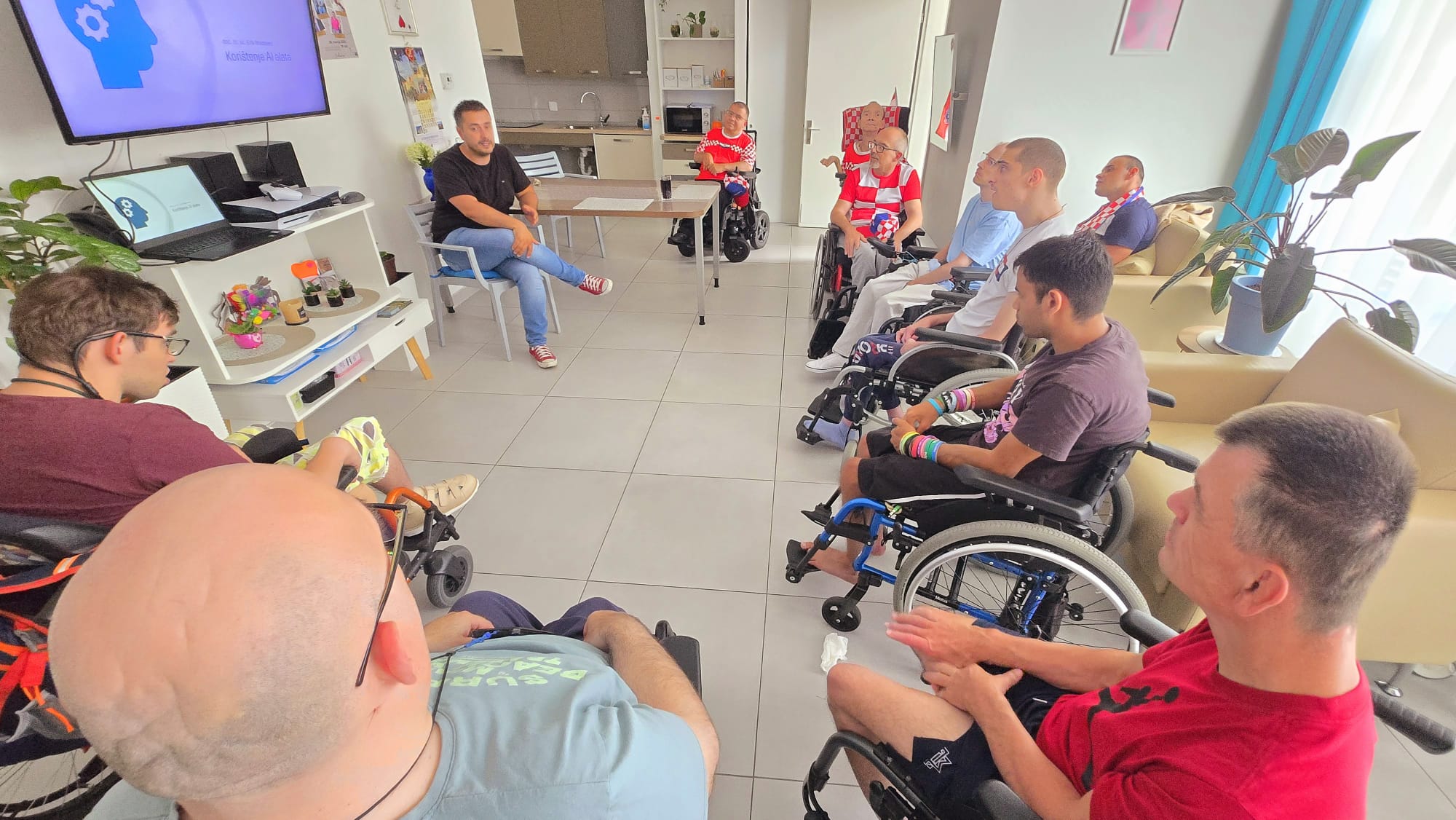
On Wednesday, 17 June, the first workshop within the institutional project “Dimensions of Digital Inclusion and Exclusion in Croatian Society (DIGI-HR)” was held at the Zagreb Centre for Independent Living. The project is implemented by the Faculty of Croatian Studies, University of Zagreb, and one segment of its activities is carried out in cooperation with the Zagreb Centre for Independent Living.
The collaboration focuses on the development of digital competencies, the promotion of social inclusion, and the reduction of the digital divide among vulnerable social groups. The cooperation agreement envisages educational, research, and professional activities aimed at enhancing digital literacy and supporting the inclusion of persons with disabilities in the digital society.
The first workshop was led by Assistant Professor Erik Brezovec, PhD, from the Department of Sociology at the Faculty of Croatian Studies. The topic of the workshop was the use of artificial intelligence in everyday life, education, and work. During the session, participants learned about the functioning of large language models, the possibilities offered by contemporary AI tools, and their practical application in various personal and professional contexts.
Particular attention was devoted to the formulation of effective prompts for artificial intelligence tools, a skill that represents one of the key prerequisites for the efficient use of AI systems. Through practical examples, participants explored the capabilities of tools such as Google One AI Premium, Gemini, and Lovable, while discussing their application in learning, communication, work organization, and everyday activities. The workshop also highlighted the importance of responsible and safe use of artificial intelligence, particularly regarding personal data protection, verification of information credibility, and the ethical challenges associated with emerging technologies.
Workshop participants actively engaged in discussions, asked questions, and explored practical ways of applying artificial intelligence in everyday life through hands-on exercises. The positive feedback received from participants confirmed the value of such educational activities, with one attendee describing the workshop as highly informative and insightful.
The DIGI-HR project continues to implement educational activities aimed at promoting digital inclusion and developing competencies necessary for active participation in contemporary society. The next workshop will be held on Wednesday, 24 June, and will be led by Assistant Professor Ana Marija Dunaj, PhD, from the Department of Sociology at the Faculty of Croatian Studies. The topic of the workshop will be “Social Media and Digital Communication – How to Communicate Safely, Responsibly, and Effectively on Facebook.”