

 Pristupačnost
The Department of Sociology was established in 1992 and is one of the core disciplines of the Faculty of Croatian Studies. The concept of sociology studies focuses on the application of sociological theories and social science methodology for understanding social processes and phenomena in the specific context of Croatian society and comparatively in a European and global perspective. The study of sociology aims to train highly qualified sociological research personnel with professional research and analytical skills necessary for productive work in the public and private sectors. The sociology program at the bachelor's and master's levels is organized according to current international scientific standards.
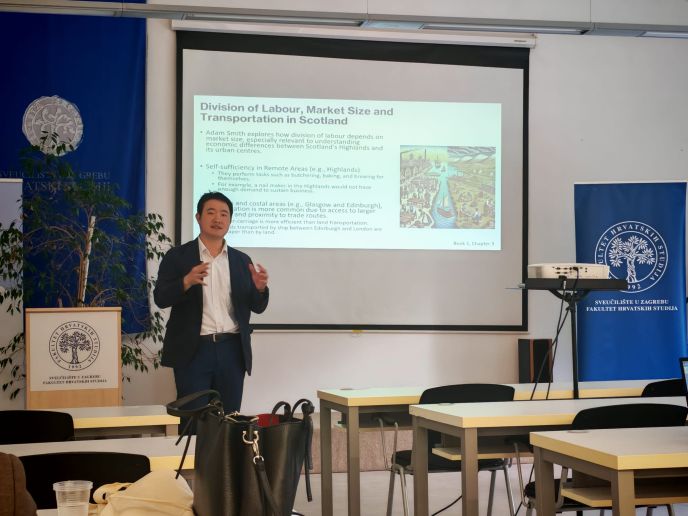
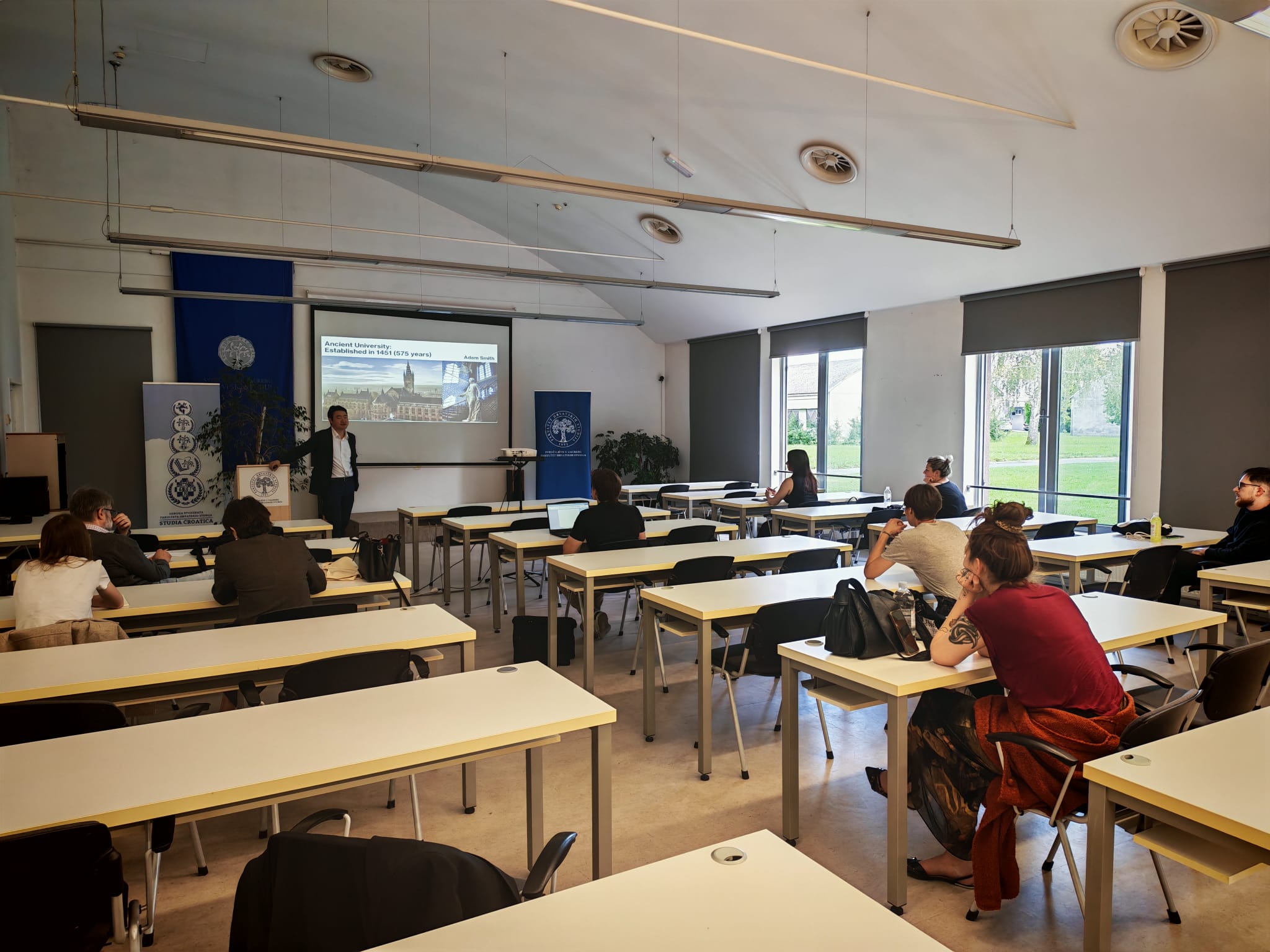
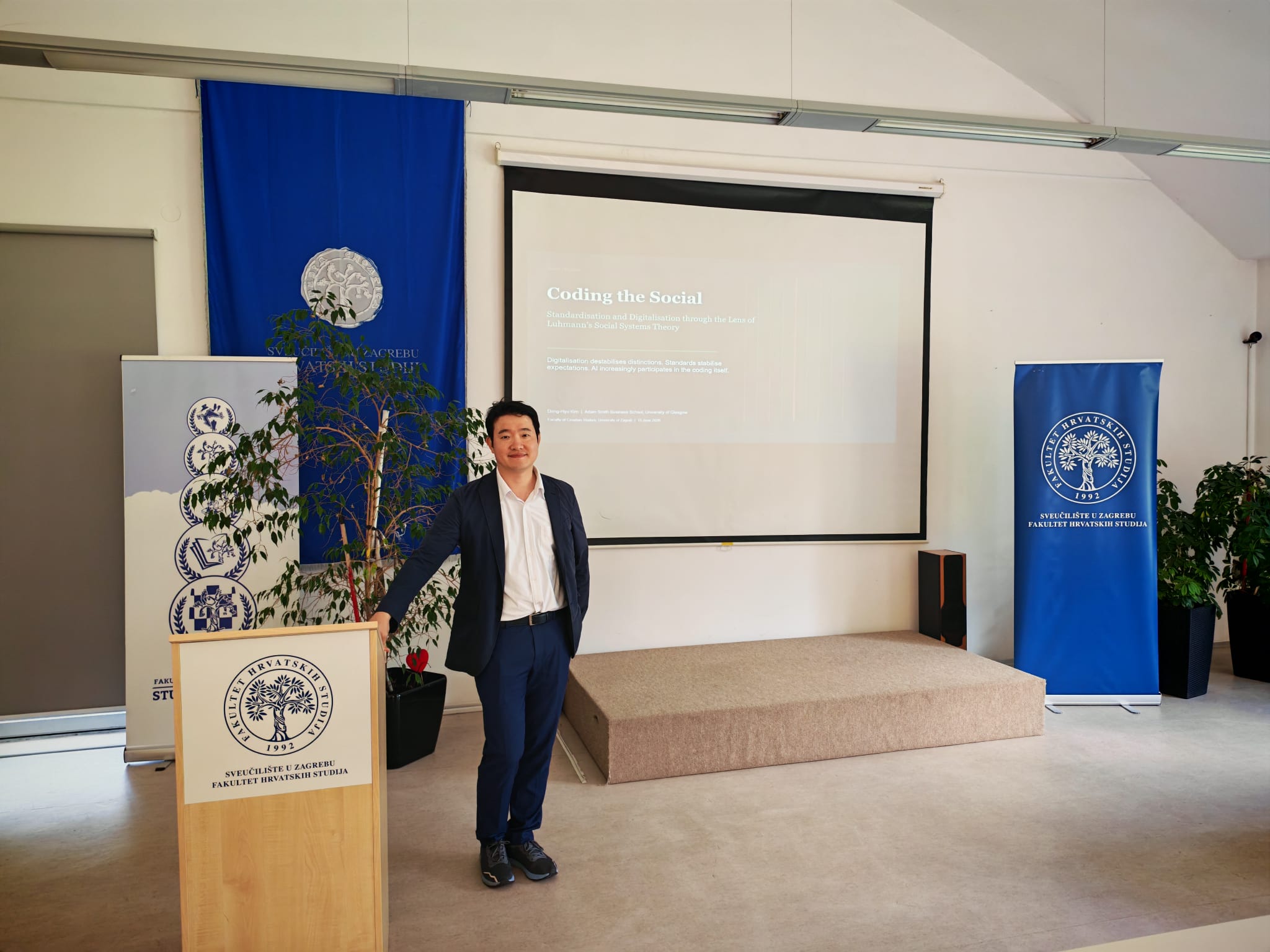
As part of the DIGI-HR institutional project and the doctoral programs of the Faculty of Croatian Studies, University of Zagreb, a guest lecture was held yesterday, 15 June, by Associate Professor Dong-Hyu Kim from the Adam Smith Business School, University of Glasgow. The lecture was entitled “Coding the Social: Standardization and Digitalization through the Lens of Luhmann's Social Systems Theory.”
Held at the Faculty of Croatian Studies Library, the lecture offered an interdisciplinary perspective on the processes of standardization and digitalization through the social systems theory of the German sociologist Niklas Luhmann. Starting from the premise that contemporary society operates through various communication systems—including law, politics, the economy, science, and others—Associate Professor Kim analyzed how standards provide stability and predictability in an increasingly complex digital environment.
A particularly interesting part of the lecture focused on the fact that standards are present almost everywhere, although we rarely notice them. Examples included traffic signs, technical standards, digital file formats, keyboard layouts, building regulations, and even rules governing how people move on escalators. Standards enable compatibility among different systems and devices, facilitate communication, and create shared frameworks of expectations in everyday life.
Discussing the long-term influence of standards, Kim presented the well-known example of the QWERTY keyboard. Although more efficient keyboard layouts exist, such as the Dvorak layout, QWERTY has persisted due to the so-called “lock-in effect,” a situation in which an existing standard becomes so widespread that replacing it becomes difficult. This example illustrates how standards do not always emerge as the best solutions but often become dominant because of historical circumstances, compatibility requirements, and user habits.
The lecture also addressed the social consequences of standardization. Referring to George Ritzer’s theory of McDonaldization, Kim argued that modern organizations increasingly strive for efficiency, calculability, predictability, and control. While such processes enable faster and more efficient service delivery, they may simultaneously reduce flexibility, creativity, and individuality.
 One of the key topics was the role of standards in the development of modern technological systems. Kim recalled the Great Baltimore Fire of 1904, during which firefighting units from different cities were unable to use the same equipment because of incompatible technical standards. The event became one of the historical examples demonstrating why compatibility and shared standards are essential for the functioning of complex systems.
Addressing digitalization and artificial intelligence, Kim argued that, from a Luhmannian perspective, digitalization does not eliminate social boundaries but instead makes them more unstable and requires their constant redefinition. Distinctions between products and services, public and private, voluntary and mandatory, as well as human and machine, are becoming increasingly blurred. As an illustration, he referred to digital platforms such as Uber, which can simultaneously be viewed as technological applications, transportation services, market intermediaries, and regulatory challenges.
In this context, standardization acquires a new function. It no longer serves merely as a tool for technical compatibility but becomes a mechanism through which different social systems temporarily coordinate their expectations. Law, the economy, politics, and science often observe the same digital technologies in different ways, while standards help establish common reference points for decision-making.
The guest from the University of Glasgow emphasized that artificial intelligence is no longer merely a tool for processing information but is increasingly involved in processes of classification, evaluation, and decision-making. AI systems operate according to their own criteria, thresholds, and assessment models, thereby participating in the construction of social reality. According to the argument presented, artificial intelligence is increasingly taking part in the very process of “coding” society—that is, in creating the criteria through which we distinguish the relevant from the irrelevant, the permissible from the impermissible, and the trustworthy from the untrustworthy.
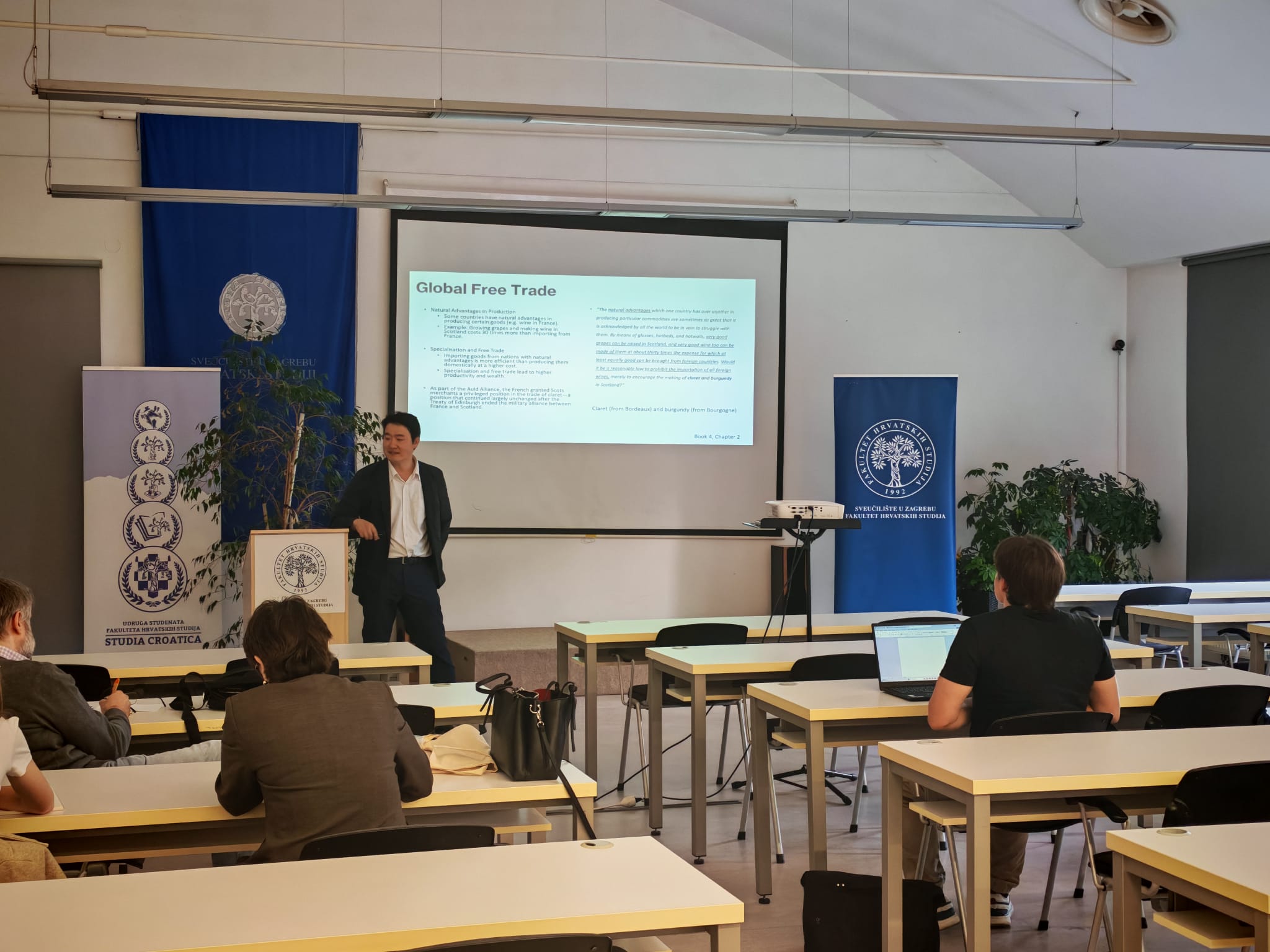
Questions and comments from the audience sparked an engaging discussion, highlighting the continued relevance of the issues raised by Dong-Hyu Kim during his lecture