

 Pristupačnost
The Department of Sociology was established in 1992 and is one of the core disciplines of the Faculty of Croatian Studies. The concept of sociology studies focuses on the application of sociological theories and social science methodology for understanding social processes and phenomena in the specific context of Croatian society and comparatively in a European and global perspective. The study of sociology aims to train highly qualified sociological research personnel with professional research and analytical skills necessary for productive work in the public and private sectors. The sociology program at the bachelor's and master's levels is organized according to current international scientific standards.
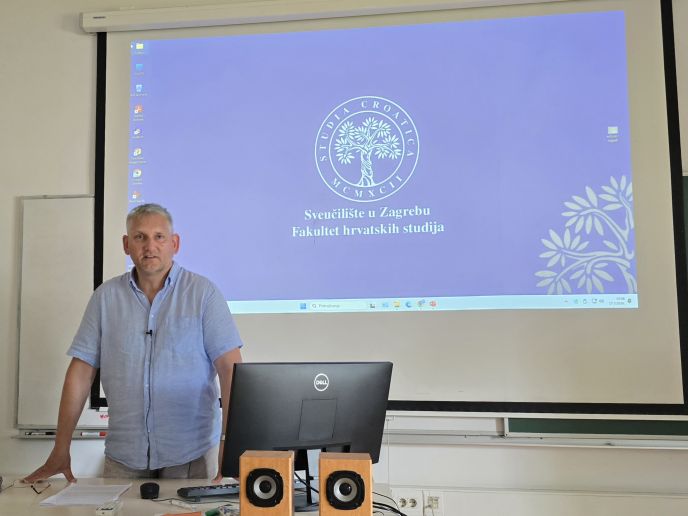
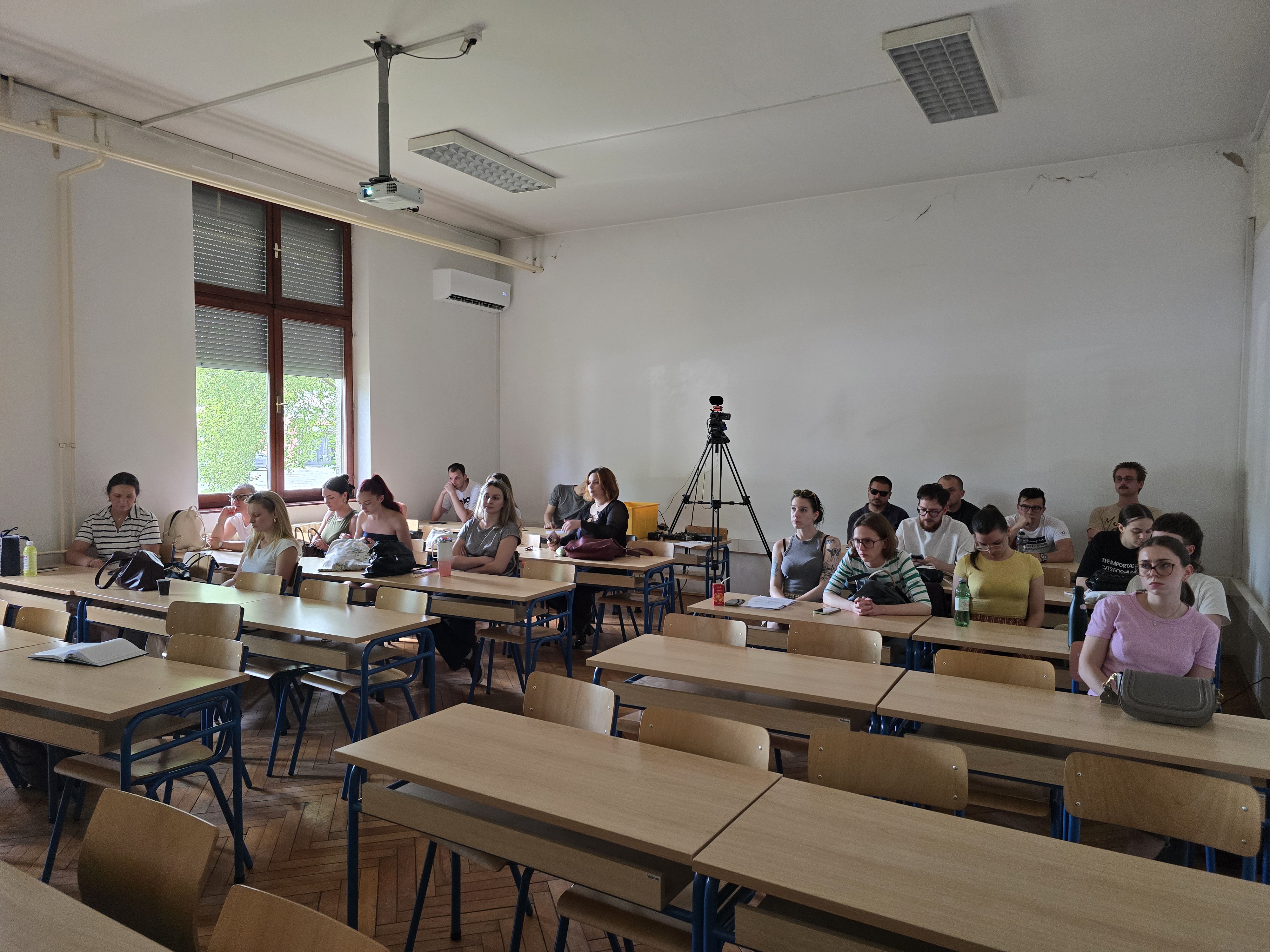
Yesterday, on 27 May, the Department of Sociology at the Faculty of Croatian Studies, University of Zagreb, hosted a guest lecture by Polish scholar Professor Arkadiusz Indraszczyk entitled “The Polish People’s/Peasant Movement”, delivered as part of the course Sociology of Social Change. The lecture brought together graduate sociology students, who had the opportunity to learn more about the development of one of the most significant socio-political movements in modern Polish history.
In his presentation, Professor Indraszczyk outlined the emergence of the Polish people’s, or peasant, movement at the end of the 19th century, emphasizing that it developed during a period when more than 70 percent of the Polish population lived in rural areas and was excluded from political life. He particularly highlighted the founding of the People’s Party in 1895 in Rzeszów, the first political party of the people’s movement, which over the decades became an important factor in the political emancipation of the rural population.
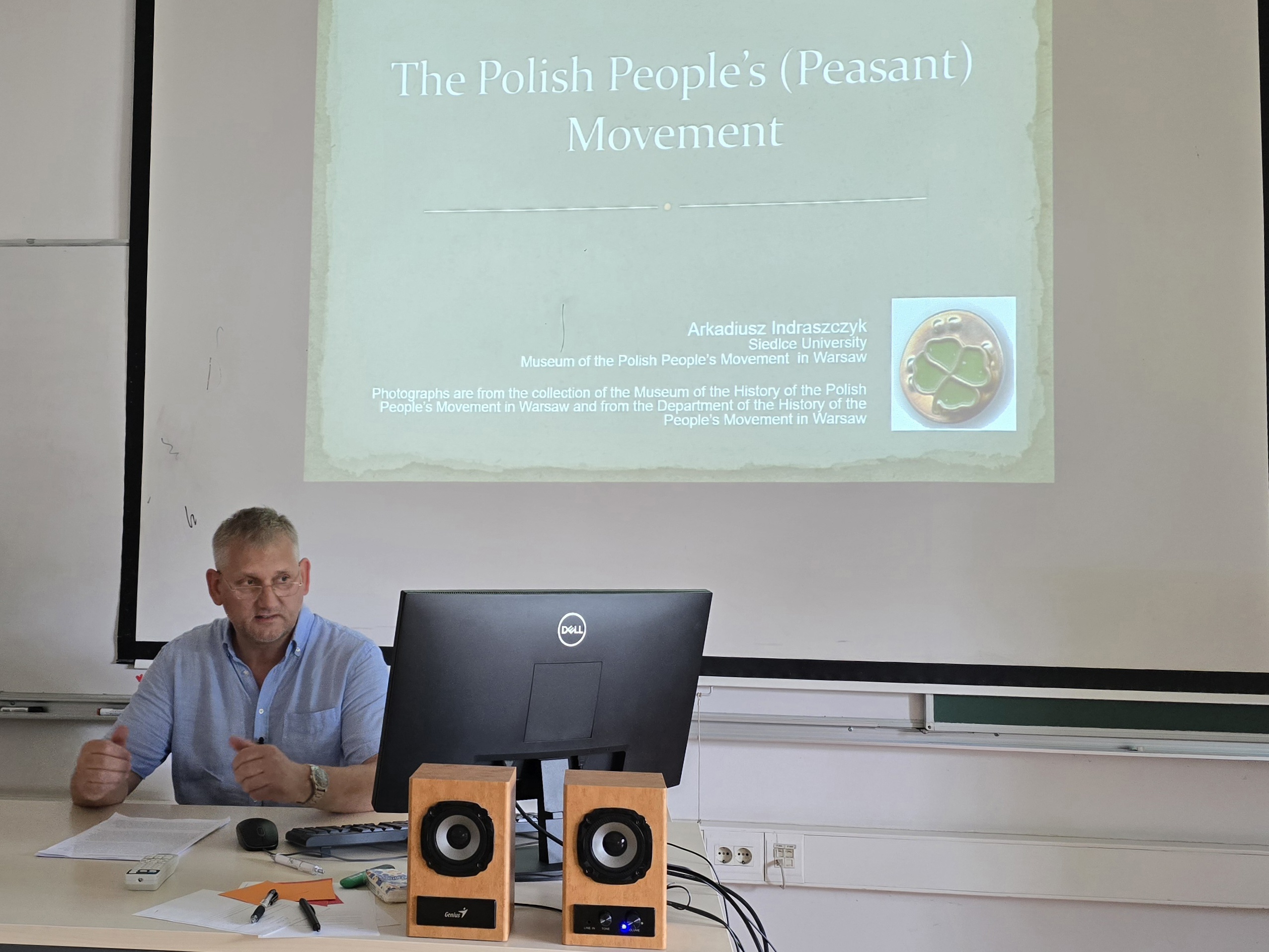 During the lecture, the complex institutional structure of the movement was presented, including political parties, cooperative organizations, rural youth associations, cultural societies, media outlets, and educational initiatives. Professor Indraszczyk explained how the interconnectedness of political, social, and economic organizations enabled the movement’s longevity and influence on the development of Polish society. Special attention was given to the interwar period, when representatives of the people’s movement participated in the formation of governments and held the highest state offices, including prime ministerial and parliamentary leadership positions.
The future sociologists also learned more about the role of the people’s movement during the Second World War, when its members participated in the activities of the Polish Underground State and organized the Peasant Battalions, one of the largest resistance military formations in occupied Poland. The lecture also covered the period of socialist Poland after 1945, when the movement operated under altered political circumstances but still played an important role in preserving rural identity, tradition, and private land ownership.
Speaking about the contemporary period, Professor Indraszczyk reflected on the transformation of the Polish People’s Party (PSL) following the democratic changes of the 1990s and its role in today’s political system in Poland. He emphasized that throughout more than a century of activity, the movement significantly influenced the social modernization of rural areas, the development of education, infrastructure, and local self-government, as well as the shaping of political culture and democratic processes in Poland.
Alongside the lecture, Professor Arkadiusz Indraszczyk also met earlier this week with the Vice-Dean for International Cooperation, Assistant Professor Antonija Ordulj, PhD. The meeting focused on possibilities for developing future international cooperation between the Faculty of Croatian Studies and the University of Siedlce.
Professor Arkadiusz Indraszczyk is a historian and political scientist employed at the University of Siedlce, where he serves as Director of the Institute of Political Science and Administration. He also works as a senior curator at the Museum of the History of the Polish People’s Movement in Warsaw and is the author of numerous scientific papers and monographs in the fields of political parties, social movements, European integration, and political thought.