Opcije pristupačnosti Pristupačnost

About Us

History classes at the Faculty of Croatian Studies of the University of Zagreb began during the 1997/1998 academic year. Currently, the Department of History offers classes at the undergraduate, graduate and postgraduate (doctoral) levels of study. 

History studies at our faculty are organized according to the contemporary scientific and didactic standards. Over the course of the past academic years, our program undeqent a transition in order to adapt its own study program to students who whish to learn more about national history. The fundamental feature of our program is the strong connection with other national historical institutions (museums, Croatian Institute of History, etc.). This fact allows students to start modeling their own research interest in the areas of national history that interest them already during their undergraduate studies. At the graduate level, students are provided with thematic specialization through a large number of non-mandatory courses. 

Although our program emphasizes Croatian history, it also includes the posibilitiy of profiling in various areas of world history: from ancient civilizations and societies to modern and contemporary history. This kind of profiling is open to students due to the wide topics of courses that are adapted to the various interests of students. 

10/09/2026

The 23rd Dies historiae - Academic and Professional Conference

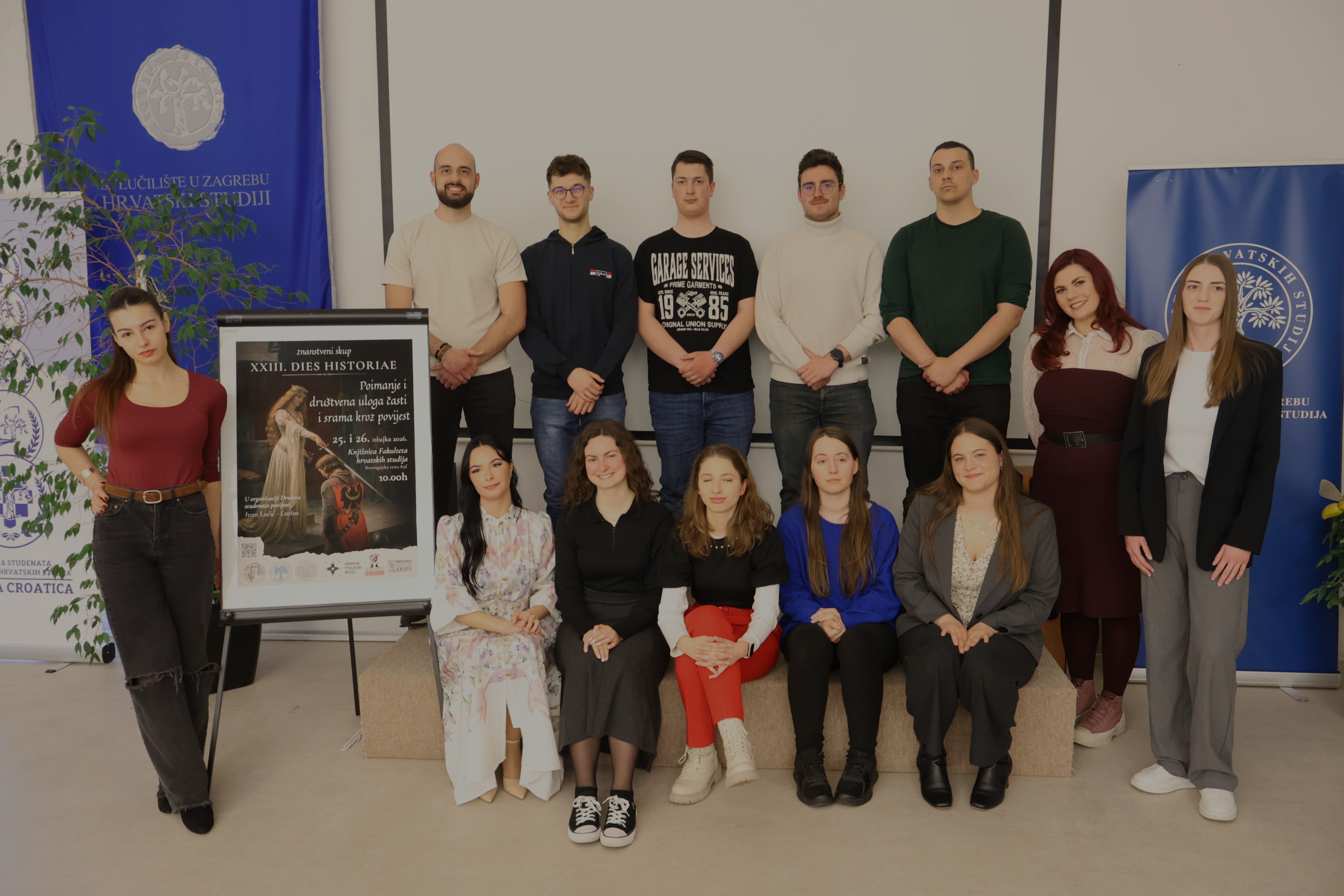
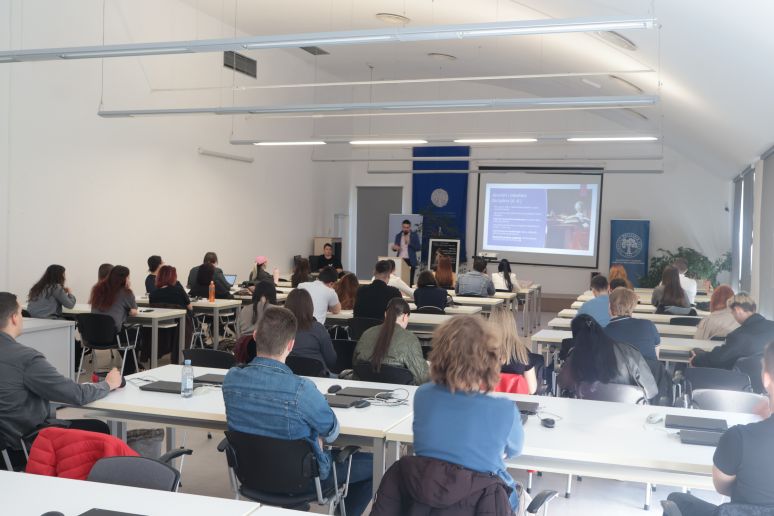
The 23rd Dies historiae academic and professional conference was held from 25 to 26 March in the Library of the Faculty of Croatian Studies. The conference was organised by the Student Society of History “Ivan Lučić – Lucius”.

The conference was opened by the Head of the Department of History, Professor Mladen Tomorad, PhD. The President of the Society, Mirta Kostov, also welcomed all those present on behalf of the organisers.

As it has done for more than two decades, Dies historiae once again confirmed its importance as a space for meeting, exchanging ideas and encouraging scholarly work. This year’s conference brought together 16 speakers who delivered a total of 17 presentations.

On the first day, the audience had the opportunity to attend nine presentations addressing the conference theme, “The Understanding and Social Role of Honour and Shame throughout History”, from a range of different perspectives. The programme continued on the second day with seven further presentations, equally substantive and inspiring, further highlighting the complexity and interdisciplinary nature of the topic.

This year’s presentations once again prompted engaging and dynamic discussions, which enriched the programme and raised new questions, confirming the importance of such gatherings for the development of critical thinking and academic dialogue.

By examining different historical periods and approaches, the speakers demonstrated how honour and shame shaped social relations, norms and identities — from mechanisms regulating behaviour in the past to their continued presence in contemporary phenomena.

In addition to its scholarly contribution, Dies historiae once again highlighted its distinctive character as a conference organised by students, who develop organisational and research skills throughout the process.

We would like to thank all the speakers, professors and participants for their contributions, as well as all members of the Society whose dedication made another successful edition of Dies historiae possible.


News list