
Opcije pristupačnosti Pristupačnost

About Us

History classes at the Faculty of Croatian Studies of the University of Zagreb began during the 1997/1998 academic year. Currently, the Department of History offers classes at the undergraduate, graduate and postgraduate (doctoral) levels of study. 

History studies at our faculty are organized according to the contemporary scientific and didactic standards. Over the course of the past academic years, our program undeqent a transition in order to adapt its own study program to students who whish to learn more about national history. The fundamental feature of our program is the strong connection with other national historical institutions (museums, Croatian Institute of History, etc.). This fact allows students to start modeling their own research interest in the areas of national history that interest them already during their undergraduate studies. At the graduate level, students are provided with thematic specialization through a large number of non-mandatory courses. 

Although our program emphasizes Croatian history, it also includes the posibilitiy of profiling in various areas of world history: from ancient civilizations and societies to modern and contemporary history. This kind of profiling is open to students due to the wide topics of courses that are adapted to the various interests of students. 

10/09/2026

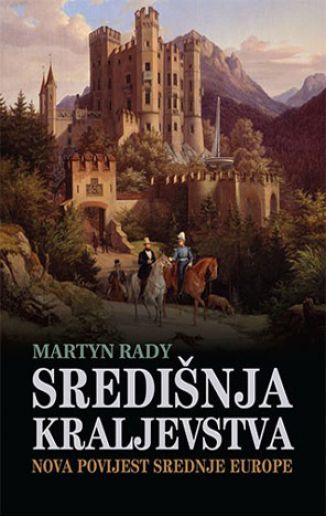
Assistant Professor Smiljanić Reviews the Croatian Edition of Martyn Rady’s Central Kingdoms: A New History of Central Europe

Associate Professor Vlatko Smiljanić, PhD, reviewed the Croatian edition of Central Kingdoms: A New History of Central Europe by the distinguished British historian Martyn Rady, a prominent expert on the history of Central Europe and Professor Emeritus at University College London.

Rady has established himself in the international scholarly community as one of the foremost experts on the political, dynastic and cultural processes that shaped Central Europe. His work is characterised by a broad chronological scope, interpretative precision and the ability to connect local and regional historical experiences with the wider European context.

The book Central Kingdoms is one of the more notable contemporary synthetic works on the history of Central Europe. In a clear yet academically rigorous manner, it presents the centuries-long development of a region that played a decisive role in shaping Europe’s political, cultural and identity history.

The book transcends narrow national historiographical frameworks and views Central Europe as a dynamic whole shaped by encounters between different peoples, political traditions, religious identities and cultural patterns. Its particular value lies in making complex historical processes accessible to a broad readership without compromising the scholarly level of its interpretation.

News list