Opcije pristupačnosti Pristupačnost

About Us

History classes at the Faculty of Croatian Studies of the University of Zagreb began during the 1997/1998 academic year. Currently, the Department of History offers classes at the undergraduate, graduate and postgraduate (doctoral) levels of study. 

History studies at our faculty are organized according to the contemporary scientific and didactic standards. Over the course of the past academic years, our program undeqent a transition in order to adapt its own study program to students who whish to learn more about national history. The fundamental feature of our program is the strong connection with other national historical institutions (museums, Croatian Institute of History, etc.). This fact allows students to start modeling their own research interest in the areas of national history that interest them already during their undergraduate studies. At the graduate level, students are provided with thematic specialization through a large number of non-mandatory courses. 

Although our program emphasizes Croatian history, it also includes the posibilitiy of profiling in various areas of world history: from ancient civilizations and societies to modern and contemporary history. This kind of profiling is open to students due to the wide topics of courses that are adapted to the various interests of students. 

10/09/2026

Professional Study Trip of History Teachers to Egypt – Group 2 (27 February–1 March 2026)

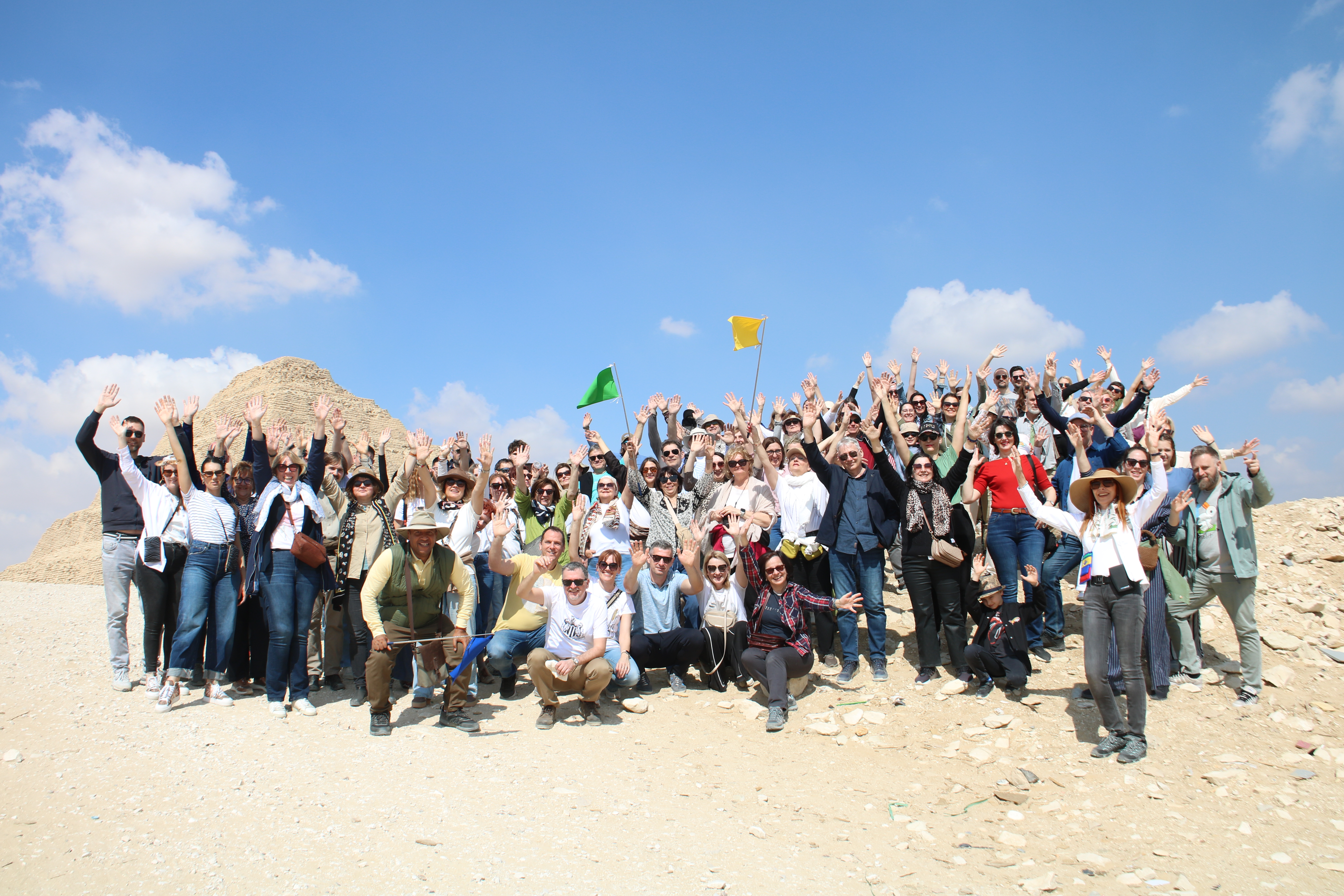
In cooperation with the county-level professional associations of history teachers in the Republic of Croatia, the second study trip to Cairo took place from 27 February to 1 March 2026 under the expert guidance of Professor Mladen Tomorad, PhD. The programme included visits to Cairo, its museums and archaeological sites in the surrounding area. The group consisted of 145 participants and was divided into four smaller groups to facilitate the visits. The first group was led by Professor Tomorad.

On Friday, 27 February 2026, the group travelled to Cairo in the early morning and visited the Grand Egyptian Museum (GEM) in the afternoon. The participating teachers from primary and secondary schools, together with experts from various other institutions, had the opportunity to view the treasures from Tutankhamun’s tomb — as many as 8,000 objects, displayed in their entirety for the first time. They then viewed numerous statues of pharaohs and dignitaries, stelae, objects from everyday life, sarcophagi, mummies and other artefacts arranged chronologically and thematically. Among the exhibits, particular attention was drawn to the large boat of Khufu, discovered as early as the 1950s and transferred to the museum from the separate museum that until recently stood beside the Great Pyramid. The teachers’ professional education continued in the evening, when the participants attended three lectures delivered by Dr Daniel Rafaelić, a representative of the Croatian Embassy in Cairo, Dr Bassam el Shammaa and Professor Mladen Tomorad. Professor Tomorad delivered a lecture on the funerary practices of the Archaic Period and the Old Kingdom, with particular emphasis on the sites of Giza and Saqqara.

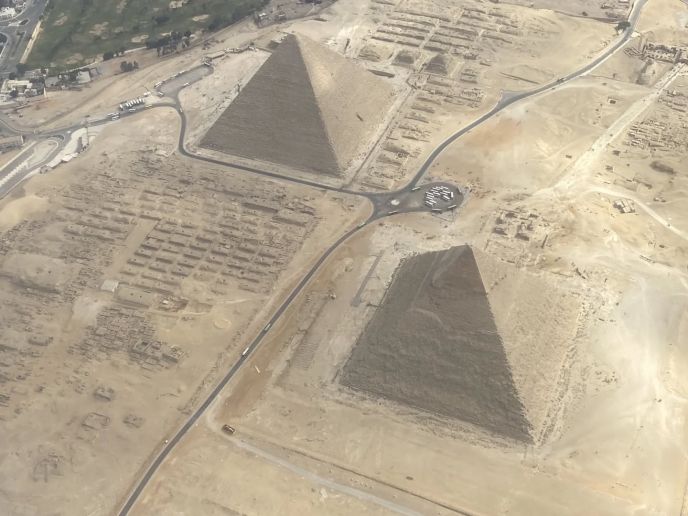
On Saturday, 28 February, the trip continued with a visit to the Giza Plateau. During the morning, the teachers toured the pyramids of Khufu, Khafre and Menkaure, as well as the Great Sphinx and the Valley Temple of King Khafre. At the end of the visit, those interested also had the opportunity to ride camels. In the afternoon, the group visited central Cairo and its famous Khan el-Khalili bazaar. The most intensive part of the tour took place on Sunday, 1 March. In the morning, under the guidance of Professor Tomorad, the teachers visited the famous ancient Egyptian necropolis of Saqqara, whose tombs and monuments trace the development of ancient Egyptian history from the Early Dynastic Period to the arrival of the Arabs in the mid-seventh century.

The visit included the funerary complexes of the pharaohs Unas, Djoser and Teti. Unlike the previous group, the teachers had the opportunity to enter the so-called South Tomb, associated with the ka of Pharaoh Djoser, as well as the two oldest pyramids containing the Pyramid Texts — the pyramids of Unas and Teti — and the nearby mastabas of Kagemni, Mereruka, the Two Brothers and others.

In the southern part of Saqqara, the teachers also saw the pyramids of the Sixth Dynasty, as well as the famous pyramids at Dahshur: the Bent Pyramid and the Red Pyramid of Pharaoh Sneferu, and the Black Pyramid of Amenemhat III. The group then visited Memphis, where they saw several important artefacts, including an embalming table, a reclining statue of Pharaoh Ramesses II, a statue of Merenptah, the Memphite Triad, and a large alabaster sphinx weighing several tonnes. In the afternoon, the group also made a brief visit to the Egyptian Museum in Tahrir Square, where they viewed numerous masterpieces of ancient Egyptian civilisation, including the Narmer Palette, the Meidum Geese, the Libyan Palette, and famous statues of Khafre, Khufu, Mentuhotep II, Amenhotep IV, Thutmose III, Hatshepsut, Ramesses II and Ramesses III, as well as many rulers of the Third Intermediate and Late Periods.

The visit also included finds from the tomb of Yuya and Tjuyu, the parents of Queen Tiye; the Tanis treasure from the tombs of pharaohs of the Twenty-First and Twelfth Dynasties; an Egyptian statue of Emperor Augustus depicted as a pharaoh; and numerous other monuments.

Despite the complicated political situation in the Middle East, the return to Zagreb proceeded as planned.

In addition to Professor Mladen Tomorad, Associate Professor Lucija Krešić Nacevski, PhD, also took part in the study trip. Through this initiative, the professors of the Faculty of Croatian Studies established excellent cooperation with numerous history teachers from across Croatia and promoted the Faculty’s study programmes.


News list